
Excavators are highly versatile heavy-duty machines designed for earthmoving, demolition, mining, and material handling. Their complex integration of mechanical, hydraulic, and electronic systems enables precise and powerful operation across diverse terrains. Below is a comprehensive breakdown of excavator components and their functions:
1. Power System
1. Diesel Engine
- Function: Primary power source driving hydraulic pumps and auxiliary systems (e.g., cooling, electrical).
- Technical Specifications:
- Turbocharged/intercooled engines with power outputs ranging from 50 kW to over 500 kW.
- Compliance with emission standards (e.g., Euro Stage IV/V, Tier 4 Final) via exhaust gas recirculation (EGR) or selective catalytic reduction (SCR).
- Key Components:
- Fuel injection system (common rail or unit injectors).
- Liquid-cooled design with radiators and charge air coolers.
2. Hydraulic Pump
- Function: Converts mechanical energy from the engine into hydraulic energy to power actuators.
- Types:
- Axial Piston Variable Displacement Pumps: Dominant in modern excavators, offering pressure-compensated flow control for efficiency.
- Gear Pumps: Simpler design, often used for pilot systems or auxiliary circuits.
- Performance Metrics:
- Operating pressures up to 35 MPa (5,000 psi).
- Flow rates tailored to machine size (e.g., 100–500 L/min).
2. Working Attachment
1. Boom (Main Arm)
- Function: Provides vertical reach and structural support for the dipper and bucket.
- Design:
- Fabricated from high-strength steel (e.g., ASTM A514) with reinforced cross-sections.
- Articulated via boom cylinders(double-acting hydraulic actuators).
- Applications: Deep excavation, high-reach demolition.
2. Dipper/Stick (Arm)
- Function: Extends horizontal reach and controls bucket positioning.
- Kinematics:
- Driven by stick cylinders, working in tandem with the boom for compound movements.
- Optimized geometry for digging force and cycle time.
3. Bucket
- Function: Engages with material for digging, lifting, and grading.
- Variants:
- Standard Bucket: General-purpose design with replaceable teeth (ISO 7451-compliant).
- Rock Bucket: Reinforced with wear-resistant steel and additional side cutters.
- Tilting Bucket: Hydraulically adjustable tilt for slope finishing.
- Tooth Systems:
- Adapters, shanks, and tips for optimized penetration and wear life.
3. Swing/Slewing System
1. Upper Structure (Swing Frame)
- Function: Houses the engine, hydraulic components, and operator cabin while enabling 360° rotation.
- Slewing Bearing:
- Large-diameter roller or ball bearing with integrated gear teeth.
- Preload adjustments to minimize axial/radial play.
2. Swing Motor and Reducer
- Hydraulic Swing Motor:
- Fixed or variable displacement motors with integrated brake valves.
- Torque output matched to machine weight (e.g., 20,000–150,000 N·m).
- Planetary Gear Reducer: Multi-stage reduction (e.g., 100:1 ratio) for precise speed control.
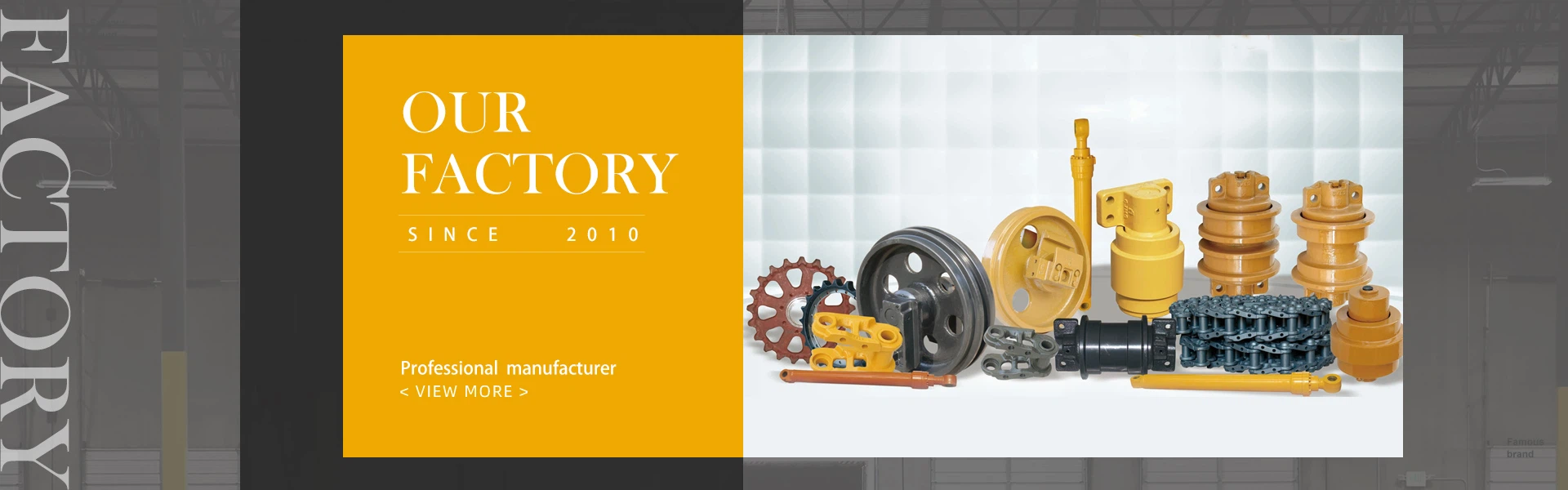
4. Undercarriage (Travel System)
1. Crawler Undercarriage
- Components:
- Track Chain: Segmented steel links with bushings and pins (sealed/lubricated designs).
- Idlers and Sprockets: Heat-treated alloy steel for durability.
- Track Rollers: Lubricated sealed rollers supporting machine weight.
- Ground Pressure Management:
- Track shoe width options (e.g., 600–1,200 mm) for soft ground or rocky terrain.
- Travel Motors:
- High-torque axial piston motors with parking brakes.
2. Wheeled Undercarriage
- Features:
- Articulated or rigid frame with oscillating axles.
- Central tire inflation systems (CTIS) for terrain adaptability.
5. Hydraulic System
1. Main Control Valve
- Function: Directs pressurized fluid to cylinders and motors via operator inputs.
- Advanced Configurations:
- Load-sensing systems (LS) for energy efficiency.
- Negative flow control (NFC) in older models.
2. Hydraulic Cylinders
- Types:
- Boom/Stick/Bucket Cylinders: Chromed rod surfaces with wear-resistant seals (e.g., polyurethane).
- Cushioning Features: Internal dampers to reduce end-stroke shock.
3. Pilot Control System
- Function: Provides proportional control of main valves via low-pressure hydraulic signals.
- Ergonomics: Joysticks with adjustable sensitiv ity and feedback.
6. Operator Interface and Electronics
1. ROPS/FOPS Cabin
- Safety Standards: ISO 12117-2 (roll-over protection) and ISO 3449 (falling object protection).
- Human-Machine Interface (HMI):
- LCD monitors displaying real-time data (fuel consumption, hydraulic temps, diagnostics).
- Programmable modes (e.g., power, economy, attachment-specific profiles).
2. Electronic Control Modules (ECMs)
- Functions:
- Engine derating based on hydraulic load.
- Anti-stall logic for smooth operation.
- Sensors: Pressure transducers, temperature sensors, and position feedback (e.g., cylinder LVDTs).
7. Attachments and Quick Couplers
1. Hydraulic Attachments
- Breakers/Hammers:
- Nitrogen-gas accumulator for impact energy (e.g., 500–5,000 J/blow).
- Auto-stop functions to prevent dry firing.
- Grapples and Shears:
- Rotator designs for multi-axis material handling.
2. Quick Coupler Systems
- Types:
- Mechanical pin grabbers (e.g., Wedgelock).
- Fully hydraulic couplers with safety interlocks.
8. Maintenance and Safety Protocols
1. Preventive Maintenance
- Fluid Management:
- Hydraulic oil analysis (ISO 4406 cleanliness codes).
- Coolant additive testing (ASTM D4985).
- Lubrication:
- Centralized greasing systems for pins/bushings
2. Critical Inspections
- Structural Integrity: Crack testing on boom/dipper welds (magnetic particle or dye penetrant).
- Hydraulic Checks: Hose abrasion, fitting leaks, and cylinder rod scoring.
3. Operational Safety:
- Trenching compliance with OSHA 29 CFR 1926.650 (slope angles, spoil pile distances).
- Proximity warning systems (radar/LiDAR) for blind-spot detection.
Advanced Technologies in Modern Excavators
- Telematics and IoT:
- Remote monitoring via CANbus/J1939 protocols .
- Predictive maintenance algorithms analyzing vibration and oil condition.
- Automation:
- Grade control systems (GNSS or laser-guided bucket positioning).
- Autonomous trenching cycles with 3D design integration.
- Electrification:
- Battery-electric models with reduced noise and emissions.
- Hybrid systems recuperating swing brake energy.