
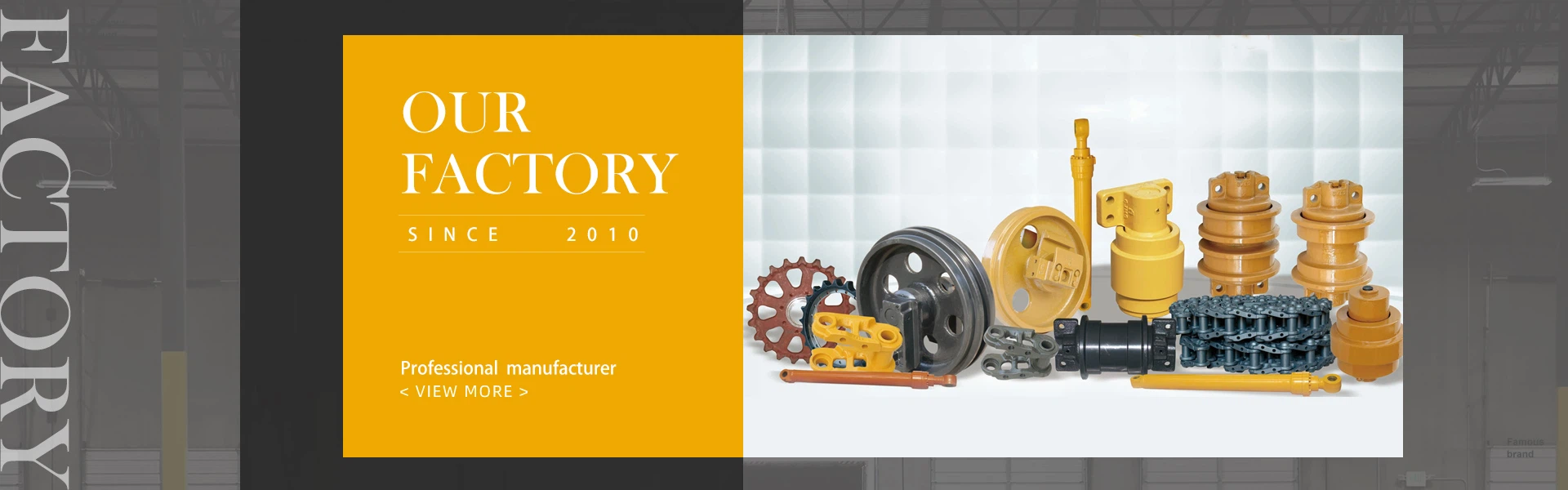
The function of the support roller is to transmit the weight of the whole machine to the ground while rolling on the track. In order to prevent derailment, the support roller should also be able to prevent the track from moving laterally relative to it. Support rollers often work in mud, water, ash and sand, and withstand strong impacts, and the working conditions are very bad. The rim is easy to wear. The requirements for supporting rollers are: wear-resistant rims, reliable bearing seals, and low rolling resistance.
1. In order to reduce the chance of muddy water entering the bearing, the movable sealing surface should be minimized. The rotary tiller in this design adopts the cantilever fixation method to reduce the movable sealing surface of the supporting wheel. This structure can make the supporting weight There is only one sealing surface of the wheel;
2. Improve the service life and reliability of seals. This support wheel uses oil-resistant and anti-aging clear rubber as the material of the seal.
The role of the supporting roller is to support the crawler. In order to ensure that the crawler does not have an excessive size, it is installed below the upper part of the crawler to minimize the sag of the crawler. At the same time, it can also reduce the production of the crawler during the working process. Jump and prevent the track from sliding sideways. The length of the upper section of the crawler determines the number of supporting rollers, generally 1 to 2 on each side, and this rotary cultivator driving system is equipped with a supporting roller on each side. Compared with the supporting wheel, the supporting wheel has a smaller force and only needs to support the crawler so that it will not fall too much. And there is less contact with muddy water during work, so the size of the supporting roller can be smaller, and there is no requirement for the height of the supporting wheel