
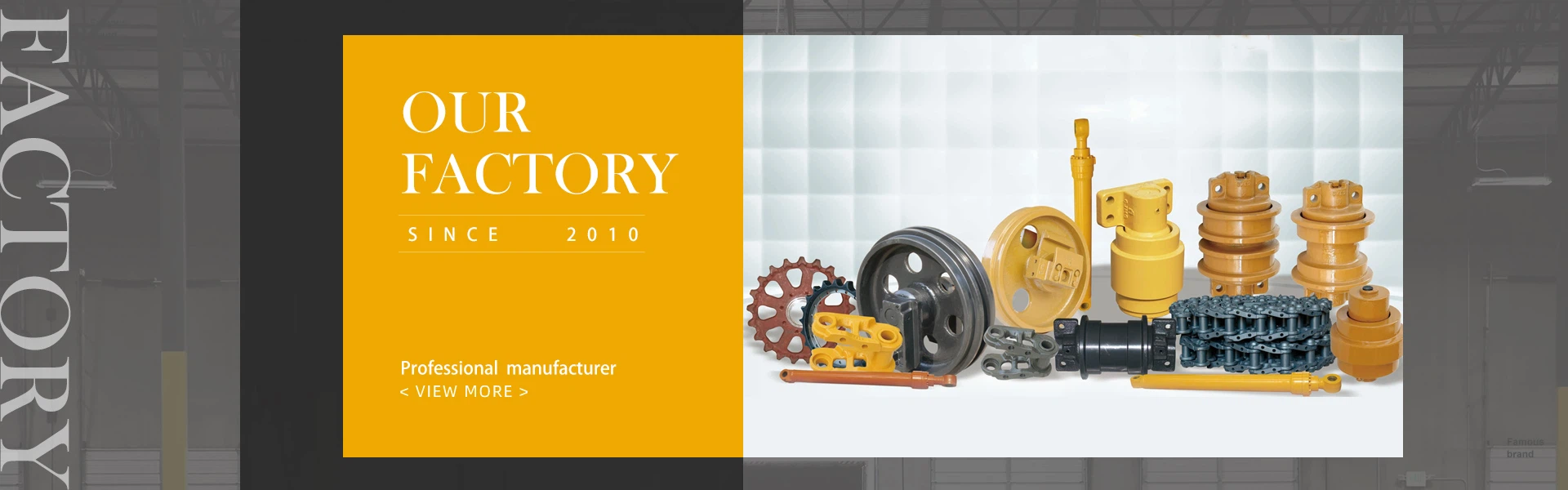
The sprocket is a mechanical component that continuously engages on the rim to transmit movement and power. Sprockets can be classified according to tooth profile, gear shape, tooth line shape, surface on which the tooth is located, and manufacturing method. The tooth profile includes tooth profile curve, pressure angle, tooth height and displacement. Involute gears are easy to manufacture, so involute gears account for the majority of applied gears, while cycloid gears and arc gears are currently rarely used.
The small pressure angle gear has a small load capacity, while the high pressure angle gear has a high load capacity, but the bearing load will increase correspondingly under the same transmission torque, so it can only be used in special industries. The tooth height in the gear has been standardized, and the standard tooth height is generally adopted. Modified gears have many advantages, and they are now used in machinery and equipment in various industries.
Gears can also be divided into spur gears, helical gears, herringbone gears, and curved gears according to the shape of the tooth line. According to the surface of the gear teeth, it is divided into external gear and internal gear. According to the manufacturing method, it can be divided into casting gears, cutting gears, rolling gears and sintered gears. According to the shape, it can be divided into cylindrical gear, bevel gear, non-circular gear, rack, worm and worm gear, etc.
The sprocket transmission is mainly completed by the driving sprocket, the driven sprocket and the middle flexible part (chain). Movement and power are transmitted through the meshing of chain links and gear teeth on the wheels.
Divided by purpose. Chain drive includes drive chain, hoisting chain and traction chain. Divided by structure. There are bush chains, roller chains and tooth chains.
The advantages of chain transmission: 1. No elastic sliding phenomenon, uniform and accurate transmission, reliable operation and high efficiency.
2. Able to work in high temperature, humidity, dust and harsh environments.
Disadvantages of chain transmission: 1. It can only be used for transmission between two parallel shafts. High cost, easy to wear, easy to stretch, and poor stability during transmission.
2. Large vibration, shock and noise. Not suitable for fast reverse gears.